I am using Fedora KDE 41. I noticed that my swap space is seemingly located on dev/zram0 and it shows as a separate disk. This is weird because I have 2 disks and it is not shown as a part of either of them. How would I go about increasing my swap to 32 GiB, so I can hibernate my laptop, in case I have to?
Also, how is ZRAM different from swap space I would create my downsizing any of my “regular” partitions? Can I delete this zram and just create a 32 GiB partition with mountpoint as linuxswap? Would the end result be the same thing?
Swap space Is linux memory breathing room, not extra RAM
Swap space Is the disk-backed or compressed-memory area Linux uses when active RAM is under pressure. It can keep a desktop, laptop, or server responsive during short memory spikes, but it is slower than RAM and should not be treated as a performance upgrade. For hibernation, Swap space must usually be persistent storage, such as a swap partition or swap file, because zram disappears when power is lost.
What is Swap space in Linux?
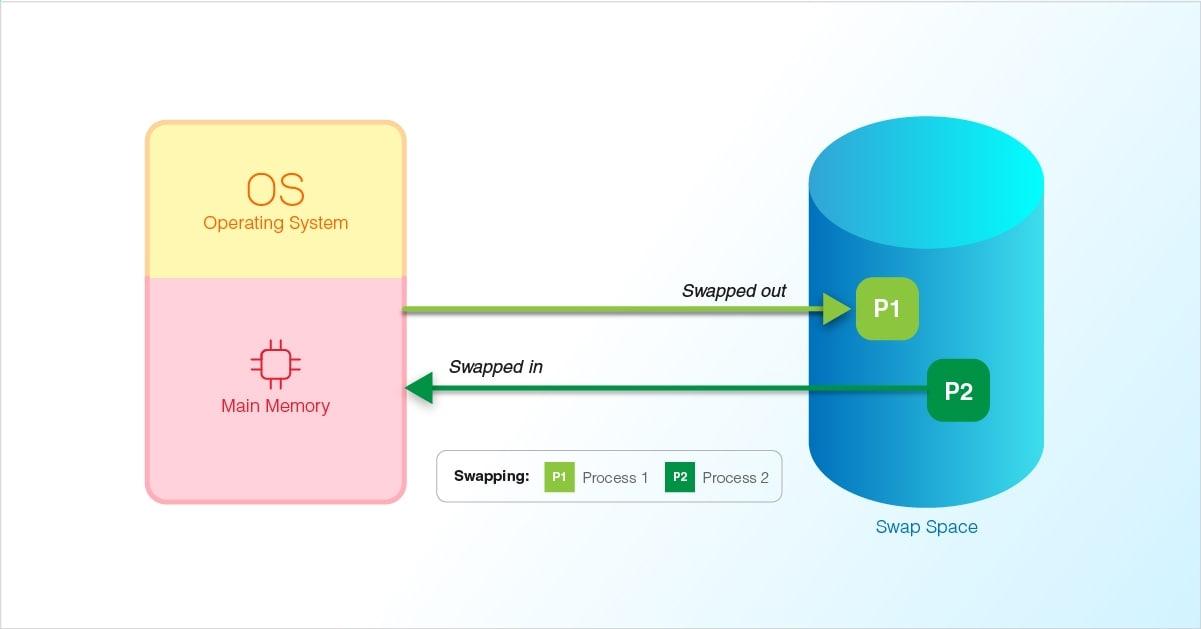
Swap space is a reserve area that the kernel can use when physical memory is full or when it decides that older, less active memory pages can be moved out of RAM. The idea is simple: keep important working data in fast memory while moving colder data somewhere else. Swap space can live in a dedicated partition, a regular file, or a compressed block device such as zram.
Swap space is not a second kind of RAM. Real RAM is fast, directly addressable memory. Traditional disk swap uses persistent storage, which may be an SSD, NVMe drive, or older hard disk. Zram is different because it creates a compressed swap device inside RAM itself. That sounds circular at first, but compression can let the system fit more inactive pages into the same physical memory footprint.
Swap space matters because memory pressure is rarely clean and predictable. A browser can open many heavy tabs, a development toolchain can start several compilers, a virtual machine can reserve a large block of memory, and a graphics application can suddenly allocate more than expected. Swap space gives Linux a controlled fallback before the out-of-memory killer has to terminate processes.
How does Swap space work when RAM fills up?
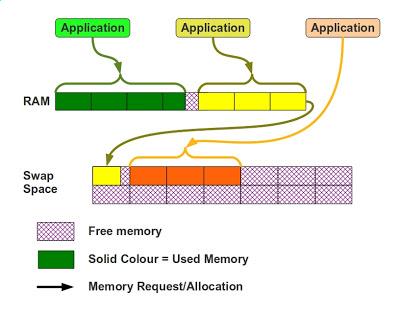
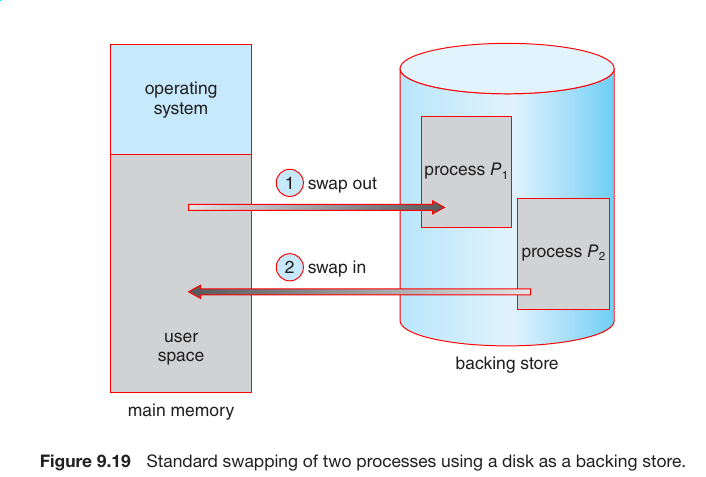
Swap space works through paging. Linux divides memory into pages, tracks which pages are active, and may move less active pages out of RAM. When an application needs a swapped page again, the kernel reads it back. This movement is normal, but if it happens constantly, the machine can feel slow because storage latency is much higher than RAM latency.
Swap space also interacts with caching. Linux uses available RAM for filesystem cache because cached files can make the whole system faster. When memory becomes tight, the kernel decides whether to reclaim cache, compress pages, move pages to Swap space, or terminate a process if there is no safe path left. The exact behavior depends on workload, kernel settings, available devices, and pressure over time.
Swap space priority is important. Linux can have more than one swap device enabled at once. A system may use zram first because it is faster than disk-backed swap, then fall back to a lower-priority swap file or partition. This arrangement is common on modern distributions because it gives everyday responsiveness while still allowing persistent Swap space for hibernation or large memory spikes.
Why does zram appear as Swap space?
Swap space shown as
/dev/zram0
is usually normal on distributions that enable zram by default. Zram creates a compressed block device in memory, then Linux treats that device as swap. A partition tool may display it beside physical drives, but it does not belong to an NVMe disk, SATA disk, or USB drive. It is a virtual device created by the running system.
Swap space through zram can be confusing because it may look like a third disk. In practice, zram is using RAM, not stealing a fixed chunk from a physical drive. It grows as pages are compressed into it and usually consumes only a small amount until the system actually starts swapping. Its configured size is a limit, not necessarily the amount currently consumed.
Swap space with zram is often effective for laptops and desktops because compressed memory is much faster than writing inactive pages to disk. It is also useful on small systems where RAM is limited. However, zram cannot preserve a hibernation image because its contents vanish when the machine powers off. That is the key difference between zram and persistent Swap space.
For readers comparing compressed memory options, the related idea of is worth understanding before resizing partitions. Zram is a performance and resilience feature, while disk-backed Swap space is a storage-backed fallback. They can work together, but they solve partly different problems.
Should Swap space be a file, a partition, or zram?
Swap space can be implemented in several ways, and the best choice depends on the job. A swap partition is simple, stable, and common for hibernation because it has a fixed location. A swap file is easier to resize and can be added without repartitioning in many cases. Zram is fast and convenient, but it is not persistent storage.
Swap space as a file is often the most practical choice when a system already exists and the user wants more room without changing partition boundaries. Modern Linux systems handle swap files well, as long as the filesystem and boot setup support the intended use. For hibernation, the bootloader and initramfs may need to know the resume location, so the setup is more specific than simply creating a file.
Swap space as a partition is useful when the system installer created it, when hibernation is a priority, or when administrators prefer a clearly separated storage area. The downside is flexibility. Shrinking and moving partitions can carry risk, especially on a laptop with important data. A tested backup matters before any partition edit.
Swap space through zram is usually best left enabled unless there is a clear reason to change it. Removing zram can reduce everyday responsiveness on memory pressure. Increasing zram too much is also not automatically helpful, because compressed pages still consume RAM and CPU time. The practical answer is often to keep zram for active pressure and add persistent Swap space for hibernation.
How much Swap space do you need?
Swap space sizing has no universal number because workloads differ. Older rules often said swap should equal RAM, but that advice came from simpler systems and different storage expectations. A laptop with 32 GiB of RAM, heavy browsers, virtual machines, and hibernation needs has different requirements from a server with predictable services and no suspend-to-disk workflow.
Swap space for hibernation usually needs enough persistent storage to hold the memory image that must be restored after power-off. Equal-to-RAM sizing is a common starting point, but real requirements can vary with compression, kernel configuration, firmware behavior, and distribution tooling. Users should verify their distribution's hibernation instructions before assuming a number is guaranteed.
Swap space for ordinary memory overflow can be smaller. On a desktop with plenty of RAM and zram enabled, a modest disk swap area may be enough as a safety net. On a development machine that builds large projects, runs containers, or opens several virtual machines, more Swap space may prevent abrupt failures, though it will not make sustained overload fast.
Swap space should be sized with the cost of failure in mind. If the system only slows briefly during a memory spike, the current setup may be fine. If the machine kills important processes, fails to suspend, or cannot hibernate reliably, adding persistent Swap space is more defensible. The point is to solve a real system behavior, not to chase a number shown in a partition manager.
How do you increase Swap space safely?
Swap space changes are safest when handled as a small workflow rather than a single command copied blindly. First, inspect the current setup. Tools such as
swapon --show
,
free -h
,
lsblk
, and the system monitor can reveal whether swap is zram, a file, a partition, or a combination. The output also shows size and priority, which explains which device Linux will prefer.
Swap space planning comes next. If hibernation is the goal, choose persistent storage and read the distribution's resume configuration expectations. If the goal is just extra protection during memory spikes, a swap file may be enough. If the system already uses zram, consider leaving it active and adding disk-backed Swap space at a lower priority.
Swap space adjustments should be reversible where possible. A swap file can often be disabled, resized, or removed more easily than a partition can be moved. Partition changes should be made only after backups and with awareness of encryption, LVM, Btrfs, and bootloader details. Encrypted systems can require extra steps because the resume target must be available early in boot.
- Check current memory and swap devices before changing anything.
- Decide whether the goal is hibernation, crash prevention, or general responsiveness.
- Prefer a swap file for flexible expansion unless the system needs a partition.
- Keep zram enabled when it is helping normal desktop performance.
- Test suspend, resume, and heavy workloads after the change.
Swap space should also be entered correctly in system configuration. Many systems use
/etc/fstab
for persistent swap files or partitions. Zram may be managed by systemd zram generator or distribution-specific defaults. A typo in storage configuration can delay boot, so changes should be deliberate and verified after reboot.
What are the benefits and limits of Swap space?
Swap space has a clear benefit: it gives Linux more options when memory is tight. That can prevent sudden application termination, allow larger temporary workloads, and support hibernation when persistent swap is configured correctly. Swap space also helps the kernel move inactive pages away from RAM so active applications and file cache can use memory more effectively.
Swap space has equally clear limits. If a workload constantly needs more active memory than the computer has, disk swap can lead to heavy paging and visible slowdowns. This is sometimes called thrashing. An SSD makes disk-backed swap less painful than a hard drive, but it does not change the basic physics. RAM is still much faster.
Swap space can also create misunderstandings around performance. More swap does not mean faster applications. In many cases, adding RAM, closing unused workloads, reducing browser tabs, limiting containers, or tuning application memory use is the better fix. Swap space is a fallback and stability tool, not a substitute for adequate physical memory.
Swap space on SSDs raises wear questions, but typical desktop swap use is not automatically a problem on modern drives. Constant heavy swapping can add writes, yet a machine that swaps heavily all day probably has a workload sizing problem anyway. The more practical concern is user experience: if the system is always swapping to disk, it will feel slow regardless of drive endurance.
Is Swap space safe to change?
Swap space is safe to change when the user understands which layer is being edited. Creating or resizing a swap file is generally less risky than resizing partitions. Changing zram settings is usually reversible but can affect memory pressure behavior. Editing a swap partition can be safe too, but partition work always deserves more caution because it touches disk layout.
Swap space used for hibernation requires special care. The resume target must remain consistent, and encrypted or Btrfs systems may need specific setup. If the kernel cannot find the hibernation image, resume may fail and the machine may boot normally instead. That is not always catastrophic, but unsaved session state can be lost.
Swap space can contain fragments of memory, so privacy-sensitive systems sometimes encrypt swap or rely on encrypted storage. Zram contents disappear on shutdown, while disk swap persists unless encrypted or overwritten. For laptops, business systems, and shared devices, swap encryption is part of the broader storage security discussion.
Swap space safety also includes operational discipline. Do not disable the only swap device before creating a replacement if the system depends on it. Do not assume zram can hibernate. Do not assume a partition shown beside disks in a graphical tool is physically located on a disk. Confirm with command-line tools and distribution documentation before making boot-level changes.
How does Swap space compare with adding RAM or tuning swappiness?
Swap space and RAM solve related but different problems. More RAM increases the amount of fast working memory available to applications. Swap space increases the amount of memory state the system can preserve under pressure, but at lower speed. If a computer regularly exceeds its RAM during active work, adding RAM is usually the stronger performance fix when the hardware allows it.
Swap space behavior can be influenced by the swappiness setting, which affects how readily Linux moves anonymous memory pages to swap relative to reclaiming cache. Lower values can reduce swap use in some desktop scenarios, while higher values may make sense for certain servers or zram-heavy setups. Swappiness is a tuning knob, not a universal cure.
Swap space also overlaps with memory compression. Zram can delay or reduce disk swapping by compressing pages in RAM. On many modern desktops, that is a good default. Disk-backed Swap space remains useful when memory pressure exceeds what compression can absorb, and it remains the typical foundation for hibernation. Together, they can create a layered setup: zram first, persistent swap second.
For users exploring related Linux storage terms, is the broader topic that includes files, partitions, priorities, and resume configuration. Swap space is the visible resource, while the implementation choices determine speed, persistence, and maintenance effort.
What should a new user remember about Swap space?
Swap space is easiest to understand as a pressure valve. It helps when RAM is crowded, but it is not magic capacity. Zram is fast because it compresses memory inside RAM, yet it cannot survive shutdown. A swap file or partition lives on storage and can support hibernation when configured correctly.
Swap space decisions should start with the symptom. If the system is stable and responsive, the default zram setup may already be doing its job. If hibernation is the missing feature, add persistent Swap space and configure resume carefully. If applications are constantly slow because the system is paging, the real answer may be more RAM or a lighter workload.
Swap space is one part of Linux memory management, alongside RAM, page cache, zram, storage performance, kernel policy, and application behavior. Treat it as a practical tool: inspect the current setup, change the smallest necessary piece, and test the result. That approach avoids unnecessary partition risk while still giving the system the fallback it needs.
Questions and Answers
What is Swap space used for in Linux?
Swap space is used as overflow memory when RAM is under pressure. Linux can move less active memory pages into a swap file, swap partition, or compressed zram device so active work can continue. It can improve stability during spikes, but it is slower than RAM and should not be treated as a direct performance upgrade.
Is zram the same as Swap space on disk?
Zram can be used as Swap space, but it is not the same as disk-backed swap. Zram creates a compressed block device in RAM, so it is usually faster than writing to a drive. Disk-backed Swap space uses persistent storage, which is slower but can survive power-off and may be required for hibernation.
Can Swap space be used for hibernation?
Persistent Swap space, such as a swap partition or properly configured swap file, can often be used for hibernation. Zram cannot be used for hibernation because its contents disappear when power is lost. Hibernation also requires correct resume configuration, so users should verify the details for their Linux distribution, filesystem, encryption setup, and bootloader.
How much Swap space should I have?
The right amount of Swap space depends on workload and whether hibernation is needed. For normal desktop fallback, a modest amount plus zram may be enough. For hibernation, many users start with an amount near installed RAM, but requirements vary. Heavy virtual machines, containers, browsers, and creative tools may justify more persistent swap.
Should I increase Swap space if my computer feels slow?
Increasing Swap space may prevent crashes when memory runs out, but it usually will not make a slow system faster. If the computer is constantly paging to disk, the active workload is larger than available RAM. Closing applications, reducing background services, adding RAM, or using zram may help more than simply creating a larger swap area.
Is a swap file better than a swap partition?
A swap file is often easier to add, resize, and remove on an existing Linux installation. A swap partition is more traditional and can be straightforward for hibernation when configured by the installer. Neither option is universally better. The best choice depends on filesystem support, encryption, boot configuration, maintenance needs, and whether suspend-to-disk matters.
Why does Swap space show up as a separate device?
Swap space can appear as a separate device when Linux exposes it as a block device, such as with zram. A graphical partition tool may show /dev/zram0 near physical disks, but zram is virtual and exists in RAM. Command-line tools like swapon, lsblk, and free can help distinguish zram, swap files, and real disk partitions.